
The History of AI: From 1956 to the ChatGPT Era
The journey of artificial intelligence from the birth of the term "AI" in 1956, through the AI winters, the rise of machine learning, to deep learning and today's generative AI.
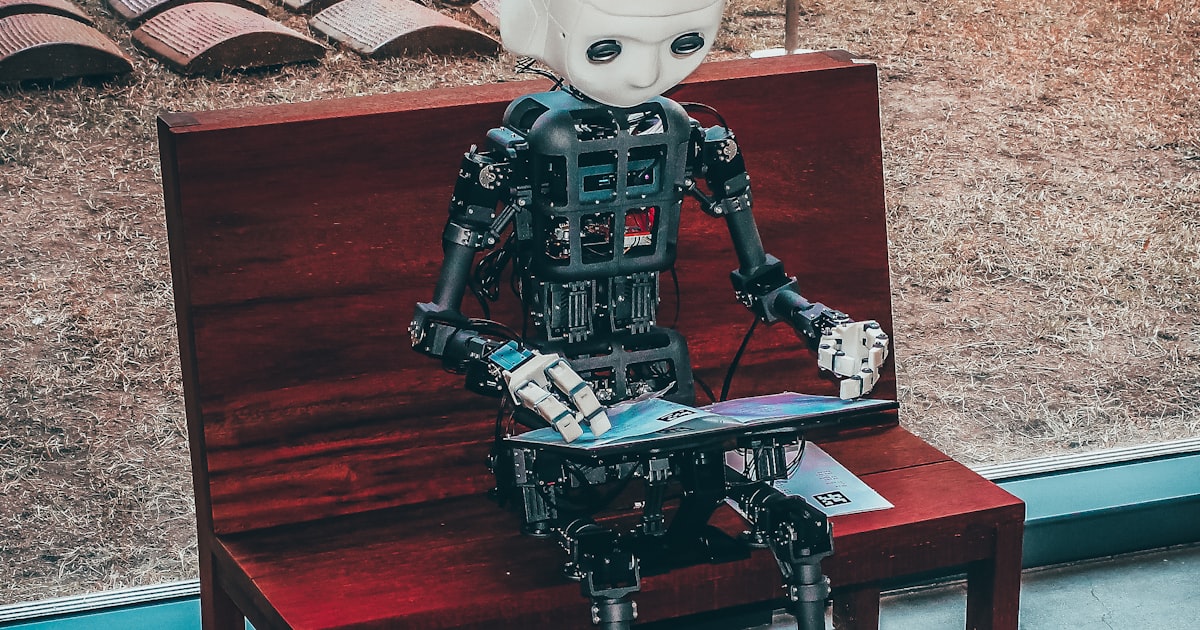
Many people assume the term “artificial intelligence” (AI) only became popular around the 1990s. AI did indeed return to the spotlight in that era — but the term itself was officially born much earlier, in 1956. Here’s the full journey, decade by decade.
Before the term existed (1940s–1950s)
AI’s foundations were laid before it had a name. In 1943, Warren McCulloch and Walter Pitts modeled how neurons work mathematically — the seed of artificial neural networks. In 1950, Alan Turing wrote his legendary paper “Computing Machinery and Intelligence” and proposed the Turing Test: could a machine imitate human conversation well enough to be indistinguishable?
1956: the birth of the term “AI”
This is the milestone. In the summer of 1956, a workshop at Dartmouth College (USA), organized by John McCarthy, Marvin Minsky, Nathaniel Rochester, and Claude Shannon, officially coined the term “Artificial Intelligence.” The Dartmouth conference is regarded as the birth of AI as a field.
📌 So the term AI isn’t from the 1990s — it’s from 1956, already 70 years ago.
The age of optimism & the first winter (1956–1980)
Through the 1960s–1970s, optimism soared. Programs like ELIZA (1966), a simple psychotherapist chatbot, and systems that could solve logic problems appeared. Researchers were convinced human-level machines were just a few years away.
Reality proved far harder. Computers of the time were too weak, and the grand promises went unmet. Funding was slashed — this period became known as the first “AI Winter,” around the late 1970s.
Revival: expert systems & the 1990s
In the 1980s, AI revived through expert systems — programs that stored expert knowledge as “if–then” rules to support business and medical decisions. This is what brought AI back into conversation heading into the 1990s (perhaps what you remember).
An iconic moment came in 1997: IBM’s Deep Blue defeated world chess champion Garry Kasparov — the first time a machine beat a human champion at chess, and global front-page news.
The machine learning era (2000s)
A major shift occurred: instead of programming rules one by one, AI learned through machine learning — machines finding patterns themselves from large amounts of data. Powered by the internet (a flood of data) and ever-stronger computers, this approach proved far more powerful. Search engines, spam filters, and product recommendations began running on ML.
The deep learning explosion (2012)
2012 was a turning point. A deep neural network (deep learning) called AlexNet won the ImageNet image-recognition contest by a wide margin. Fueled by GPUs (graphics chips for parallel computing) and massive data, deep learning exploded — enabling accurate face recognition, speech, and automatic translation.
The generative AI era (2017–present)
In 2017, Google introduced the Transformer architecture in the paper “Attention Is All You Need” — the foundation of modern language models. This is where LLMs (Large Language Models) were born.
The public peak: the launch of ChatGPT in late 2022, which put generative AI in everyone’s hands for writing, coding, and answering questions in natural language. AI that was once a lab topic now sits in the pockets of billions.
A quick timeline
1950 Turing Test · 1956 the term “AI” is born (Dartmouth) · 1966 ELIZA · 1970s AI Winter · 1980s expert systems · 1997 Deep Blue beats Kasparov · 2012 AlexNet & deep learning · 2017 Transformer · 2022 ChatGPT.
Closing
AI’s history is a cycle of high hopes, disappointment, then real leaps — not a straight line. What sets today’s era apart isn’t just ideas, but three fuels finally available at once: massive data, cheap computing (GPUs), and mature algorithms. That’s why AI today feels far more real than the promises of either 1956 or 1990.
AI isn’t just theory — Elang Membership uses AI-based face recognition for gym access. Learn how it works in the AI face recognition engine, or see Elang products.